| On Babushkas and Postcapitalism: Theorising Diverse Economies from the Global East As transformative visions for more just and sustainable societies multiply around the globe, the Diverse and Community Economies approach presents one of the most influential strategies to advance postcapitalist visions. In this paper, we contribute to this project based on our research and activism in the Global East, intended here as Central and Eastern Europe and the former Soviet Union. We argue that engaging with the Global East is not only a matter of epistemic inclusivity but also a (too-often-neglected) opportunity to learn from a region with a history of dramatic economic transformation and diversity. We highlight examples of community economies already contributing to more-than-human wellbeing, and we present emerging theoretical insights concerning temporality, the multi-sitedness of the enterprise, and diverse economic subjectivities. With that, we articulate our ongoing research agenda and advance conversations with postcapitalist scholarship and politics. |
| Workshops and liberation in Freetown Christiania: Tensions in a post-growth community economy Eco-communities envision and enact practices which make a double movement: away from the ecologically destructive tendencies demonstrated by contemporary societies, and towards shared, participatory alternatives which are socially and environmentally non-exploitative. In spite of this statement, Freetown Christiania has a complex relationship with environmental sustainability, lacking many of the common understandings of that concept which underlie pro-environmental collective action (Verco 2018; Winter 2016). It also consistently deviates from many of the usual tropes or imaginaries of an eco-community, given its location in the heart of a major capital city and the absence of community-based food production. Much of Christiania’s soil is contaminated after its prior use by the state as a weapons store and military testing site and is not seen by residents as safe for producing many crops. Nonetheless, this chapter explores community economic practices in Christiania, particularly focusing on tendencies towards economic democracy and solidarity economics. It argues that
Christiania presents patterns for a post-growth community economy, tending away from the most destructive tendencies of capitalism. It also outlines, however, the acute challenges posed by recent developments. By doing so, we hope it contributes to a more granular, empirical understanding of the challenges and possibilities faced when building diverse and community economies. |
| Eco-social enterprises: ethical business in a post-socialist context This chapter focuses on alternative economies in a European post-socialist country, the Czech Republic, looking for transitions not towards, but beyond capitalism. After a brief historical excursion, the authors use the concept of eco-social enterprise and a five-dimensional, sliding-scale research framework to expand the EU social enterprise definition imported to post socialist-countries. The criteria include: 1. other-than-profit goals; 2. using profits to replenish nature and community; 3. democratic and localized governance and ownership; 4. rootedness in place and time; 5. non-market production, exchange and provisioning. Research has uncovered a heterogeneous group of entities including organic farms, community gardens, community cafés, a consumer cooperative, a municipally-owned shop, a community school, etc. Using brief illustrative case studies, the authors look at the varied traditions and diverse ideologies that shape and motivate current Czech eco-social enterprises. |
| The social solidarity economy as a strategy to mitigate the climate crisis |
| Is community energy really non-existent in post-socialist Europe? Examining recent trends in 16 countries Community energy (CE) initiatives are developing in many regions of the world through a great diversity of typologies. Europe has a leading role with thousands of ongoing projects of small and medium size, which are however unevenly distributed over the continent. The density of CE projects is highest in North-Western and parts of Central Europe; on the contrary, their spread in post-socialist European countries (PSECs) has been reported to be much more limited. However, the (under)development of CE in PSECs remains an understudied topic in the literature. In this paper, we present an exploratory overview of the situation and briefly discuss its potential explanatory factors for 16 PSECs. We find differing development levels of progress, with Croatia outstanding with a diversity of projects and a certain maturation of the field, the Czech Republic, Hungary, Poland, Slovakia and Slovenia with a reduced number of rather small-scale projects, while in the remaining countries no operational relevant projects have been found to date. We present our methods, overviews by country and some tentative explanations. We suggest further research to be directed towards in-depth analysis of single countries and relevant project cases in PSECs. |
| Social solidarity economy |
| Eco-social enterprises |
| Changes in pastoralist commons management and their implications in Karamoja (Uganda) This article analyzes the progression from traditional to current pastoralist practices and the contemporary diversification of livelihoods of the Jie group of the Karimojong in the Kotido district in Karamoja (Uganda). the focus is on changes of land use, framed by the commons debate. We identify factors that have forced the Karimojong to abandon their traditional mobile pastoral lifestyle and to adopt new income-generating activities, including charcoal production and brick-making, which may have detrimental effects on local forest and soil cover. These have included repeated enclosure of common grazing lands by colonial and postcolonial governments. We conducted empirical research (interviews and focus group discussions) in 2012. They confirm the superiority of traditional pastoralist practices (in terms of safeguarding sustained productivity of pastures) compared to the current situation. An important factor leading to current unsustainable pastoralist practice involved the mass acquisition of firearms by the Karimojong in the 1970s and 1980s, violent cattle raiding and subsequent unequal disarmament and establishment of army-controlled cattle herding. This radical enclosure of the commons by the government, linked to impoverishment of a large part of the population in terms of cattle numbers, has necessitated the emergence of new, potentially environmentally detrimental livelihoods for the Jie. However, the escalation of the firearm crisis cannot be seen in isolation from a century of commons enclosure by governments, curtailing traditional practices and leading to insecurity and impoverishment of the Karimojong. The situation is exacerbated by current policies of the Ugandan government, geared to agricultural sedentarization, which may be unsustainable given the local natural and climatic conditions. |
| Co-operatives |
| Eco-social enterprises in practice and theory - A radical vs. mainstream view |
| Social enterprises and non-market capitals: a path to degrowth The aim of this paper is to look at alternatives to the classic for-profit shareholding enterprise and to suggest how such alternatives might be supported within the current economic system. Another aim is to link the social enterprise and degrowth discourses. We first re-define the economy as including non-monetised sectors (the core economy and the economy of nature) and discuss the liminal zone of not-for-profit and not-only-for profit organisations. We then look at social enterprise definitions from a degrowth perspective and explain why the dimensions of scale, place, environment and provisioning patterns need more space in the social enterprise discourse. After that, we define non-market capitals as capitals taken out of the market and placed under local/member/democratic control and explain their importance in a degrowth economy. We give examples of non-market capitals and suggest a model involving … |
| Economic democracy: A path for the future? As opposed to political democracy and its attempts at power control in the public sector, the concentration of economic power, and its antidote, the concept of economic democracy, has received much less attention. In the paper, we first offer a definition of economic democracy as a “a system of checks and balances on economic power and support for the right of citizens to actively participate in the economy regardless of social status, race, gender, etc.” Based on our definition, we suggest six possible faces of economic democracy and look at their implications for the vision of a sustainable, equitable and non-growing society, as discussed within the degrowth movement: (1) Regulation of market mechanisms and corporate activities. Regulation is one of the most obvious paths to curbing economic power, hence we highlight the issue of deregulation vis a vis possible degrowth policies. A revision of the free-market paradigm is suggested. (2) Support for social enterprises. We discuss different forms of democratic governance within enterprises and suggest that co-operative approaches, common in social enterprises, are better suited to a degrowth economy. (3) Democratic money creation processes, including pluralist community currencies, are suggested to counter economic power caused by the practice of fractional banking. (4) Reclaiming the commons (especially in their original sense as communal land stewardship systems) both conceptually and physically is seen by us as an important aspect of enhancing economic democracy. (5) Redistribution of income and capital assets is discussed as another approach to achieving economic democracy. (6) Finally, inspired by Vandana Shiva, we suggest that a broader view of economic democracy would involve a diversity of production scales and modes, including small-scale, subsistence and self-employment. |
| Economic Localization Revisited The concept of economic localization, although receiving increasing academic and practical interest, still lacks a solid theoretical background. Our aim here is to suggest a working definition of the term economic localization and to outline its possible interpretations and operationalizations. Based on a detailed analysis of six monographs on the subject, we: (i) summarize the content of localization narratives as presented by the individual authors, capturing the variability of the localization agenda; (ii) present 11 localization dimensions and 17 more concrete aspects of localization arguments as a way to structure and operationalize the concept; and (iii) suggest a condensed working definition of the economic localization concept. We argue that it is crucial to acknowledge the complexity of the economic localization agenda, which should not simply focus only on some of its aspects without keeping a sense of the whole in mind. We thus propose to define economic localization as both the process and the result of moral, political and practical support of as many localized aspects of production and consumption as possible and desirable. Finally, we discuss the construction of “the other” within the localization argument, and the position of the localization concept within the research agenda of ecological economics. Copyright © 2012 John Wiley & Sons, Ltd and ERP Environment. |
| Living in the Cracks: A Look at Rural Social Enterprise in in Britain and the Czech Republic Living-and often thriving-in the cracks between the business world and the state system is an amazing variety of organisations which, according to some economists, theoretically shouldn’t exist. That’s because their goal is not to make profits but to meet social needs which both the market and government either can’t meet nearly as well or have totally ignored.
There's not even a good collective name for these organisations, although Third Sector is often used and causes most people's eyes to glaze over. Yet, as this book shows, all human life is there. Based on dozens of interviews with people who have set up and run these organisations, it shows how their struggle to carry their ideals forward has led to lives with more joy, fulfilment and satisfaction than is normally found in commercial life or the civil service. In a world increasingly dominated by giant companies for whom communities mean nothing, and in which the state sector is constrained by limited budgets and tight rules, organisations such as those described here are going to be needed everywhere if we are not to have major gaps in our lives and in the services available to us. Written in an entertaining personal style, this book will not only inspire and guide many of those who will decide to meet those needs but will also enable them to get in touch with some of the pioneers mentioned in its pages. 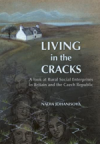
|