| Brave New Alps: Catalyzing a Rural Resurgence through Commoning A conversation between Bianca Elzenbaumer and David Bollier, exploring how the design work produced by Brave New Alps does not aim for market development and conventional investment, but for participatory vehicles that honor social imagination, improvisation, and collective impact.
|
| Powering the Commons Through Design: Embracing the Aesthetics of Convivial Imperfection In this chapter, I explore the following questions: • How can design strategically strengthen non-capitalist and postcapitalist economies and increase the social power of those sustaining them? • What role does aesthetics plays in shifting power towards postcapitalist modes of life? • How can it more effectively contribute to make postcapitalist modes of life both widely desirable and translocally regenerative?
This chapter is based on a keynote at the By Design or By Disaster conference at the Free University of Bozen-Bolzano in 2024.
|
| Contemporary Commoning Practices in the Alps: Co-Creating Spaces for Imagination and Action In this text I share some key working principles and community projects that under-pin how I contribute to the collective regenerative work underway in the Italian Lagarina valley.
I introduce the working principles of “commons” and “community economies” that permeate my work, subsequently explaining how these principles manifest themselves as theory-practice relays (aka practical projects in a close and creative conversation with theory) within (and via) the community academy La Foresta2—a physical space and a collective that I co-founded.
|
| New European Bauhaus meets Community Economies In this publication we present economic mapping tools, showcase community economies and analyse what is going on behind the scenes of New European Bauhaus (NEB) initiatives. Its special focus is on the kind of economic reasoning and acting that makes NEB initiatives viable and (possibly) resilient in the long-term. The publication emerged from our desire to explore the “behind the scenes” of New European Bauhaus practices driven by the desire to support other organisations, informal groups and active citizens in a shared effort to make more resilient and regenerative presents and futures. This publication is the result of an Erasmus+ project carried out as a small-scale partnership in adult education by La Foresta – community academy (IT) and Trajna (SLO) between December 2023 and November 2025. www.nebmeetscommunityeconomies.net
Download publication: https://zenodo.org/records/18211858
|
| Co-Creating a Festival with and for Rural Commoning Initiatives: A Transdisciplinary Place-Based Process’ Transdisciplinary collaboration is well-established in sustainability science scholarship. Stakeholders from the cultural and artistic sector can significantly enrich the co-creation process by providing diverse perspectives on caring for people and places in marginalized areas. A key challenge is engaging these stakeholders early in the co-design phase to foster a sense of co-ownership and shared responsibility. To date, artists and cultural experts are mostly involved as service-providers, with little opportunity to embed their visions and values in the project at stake. Drawing on a legacy of transdisciplinary and participatory action research, we present an early collaboration involving architects, designers, cultural and sports association members, educators, farmers, workshop facilitators, and artists. This collaboration focused on co-creating a rural festival to showcase and connect commoning initiatives, and to foster a sense of care for community and environment, in a moment of vulnerability and isolation due to the COVID-19 pandemic. Our case study illustrates how festivals can catalyze enthusiasm and energy, engaging the wider public in lived experiences of collective care for social-ecological systems, and providing a platform for marginalized voices, challenging dominant narratives about rural livelihoods and well-being. The research highlights the potential for creating actionable knowledge that is reflective of local contexts and needs. Results also demonstrate how arts- and place-based methods can provide boundary objects that blur disciplinary differences and facilitate dialogue on complex and sensitive sustainability-related issues. We discuss how these methods can be further incorporated into transdisciplinary research and reflect on the practical and ethical challenges posed by early co-design and festive events. |
| Infrastructuring for Caring Food Practices: Learnings from an Alpine Community Academy In this paper, we explore instances of grassroots infrastructuring in support of communal learning projects that centre caring food practices. We explore these instances of infrastructuring from a practitioner perspective, i.e. from the perspective of people who are closely involved in these efforts as part of the community academy La Foresta, based in the Italian Alps. We present four distinct yet interdependent activities – a community garden, a participatory drinks initiative, a mobile bread oven, a forest school – and trace how food acts as a low-threshold and convivial element that fosters community economies. These economies in turn foster empowering narratives and practices of eco-social transformation. |
| Reclaiming Abandoned Railway Infrastructure for Post-Progress Times We work at a train station. Not at the ticket counter, the bar, or the toilets, but at a grassroots community academy called La Foresta, located right next to the office of the railway police. We have worked here since 2017, first around and now in our local train station, as a group of actively engaged citizens, freelance educators, researchers in the wild, and change-oriented feral entrepreneurs.
In this text, we share three vignettes and the respective key learnings of the collective process of creative and transformative instrastructuring that we are driving in and around the train station of Rovereto, a town with 40,000 inhabitants in the Italian Alps. |
| Station for Transformation: Co-Design Strategy This document lays out the co-design strategy used in the design and implementation of the EU-funded project Station for Transformation unfolding in Rovereto (Italian Alps) between 2024 and 2027. The methodology is closely aligned with the New European Bauhaus approach and focuses on enhancing the local community’s capacities to transformatively engage with the challenges posed by climate change and biodiversity loss. The project Station for Transformation emerged from a collaboration that the Municipality of Rovereto, the citizen group La Foresta and Brave New Alps have been undertaking since 2017. Since then, they have experimented with the activation of a horizontally-led community academy at a 150m2 space at the train station of Rovereto. This experimentation was already supported by the Italian Railway Network (Rete Ferroviaria Italiana) and Europe Consulting, who lead the network of help center across 24 Italian railway stations. It was this experimentation that led through a first co-design iteration to the joint plan to transform the whole train station into a public-civic hub that aims to enhance the local community’s capacities to mitigate and adapt to climate change (and its intertwined twin challenge biodiversity loss).
The project is funded by the European Urban Initiative.
|
| PhD By Design: Rethinking Practices to Bring Together Practice-Based Design Researchers Conducting PhD’s Practice-based design PhDs have gained momentum, but the integration of design practice into the PhD thesis lacks consensus. The PhD By Design initiative offers insights and reflections on approaches to enable productive collaboration among design practitioners conducting practice-based PhDs. The initiative includes events, publications, and an interactive database showcasing practice-based research in design. The initiative rethought traditional academic event structures and encouraged unique formats for collective knowledge sharing, promoting quick and wide experimentation without the preciousness that often surrounds academic research. PhD By Design created a supportive environment to share practices, experiences, dilemmas, failures and doubts while contributing to the wider practicebased design research community. This paper presents the initiative as an example of a practitioner-led effort and highlights its three main formats to facilitate dynamic modes of engagement among participants. The initiative promotes collaborative exploration, unique formats for collective knowledge sharing, and supportive engagement for the practice-based design research community. |
| Moving from Critical to Caring Design Practices in an Interdependent World What can it mean to shift from a critical to a caring design practice? I raise this issue as urgent and significant within the interdependent planetary dynamics of climate breakdown, rapid species extinction and the vertiginous exacerbation of social inequalities spurred by the Covid-19 pandemic. To explore this question, I take my own participatory and research-led design practice as a reference point that helps me to ref lect on how care can be central to design practices today.
|
| La Foresta La Foresta is a community academy that is located at the train station of Rovereto in the valley of Vallagarina, Trentino, an autonomous province in the North of Italy. The project was collectively founded in 2017, the initiators were motivated by the desire to create a space where different cultures and the various civic actors in the area could come together to learn from each other, both in theory and practice, in order to explore emerging commons and community economies. As such, the space and project provide an infrastructure for emergent commoning practices, on the one hand, and an avenue to shape concrete demands and practices for the territory as a commons, on the other.
|
| Design(ers) against Precarity: Proposals for Everyday Actions How to create the social and material conditions that make critical, transformative design practice possible? This question continues to drive us in our work, especially because we are convinced that if we want design skills to be used for the creation of a world into which many worlds fit, then lots of people interested in doing such transformative work need to be enabled to do it repeatedly and in the long-run.
|
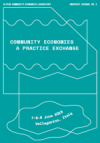
| Community Economies, a practice exchange: 7-8-9 June 2019, Vallagarina Italy During a three-day gathering in the Italian Alps in 2019, we wanted to explore how practices of community economies are being activated by people coming from an art and design background in a variety of local contexts. This practice exchange was an occasion to bring together practitioners and theorists to work together on concrete case studies of artist and designers activating community economies in diverse places across Europe. Another objective was to support several local projects in developing or strengthening their community economies approach. A core question of the gathering was how community economies practitioners deal with issues of scale, as often these practitioners find their work’s validity challenged along lines of argumentation that claim that only what is scalable and effectively scales has potential for transformation.
Through this Snapshot Journal I give an insight into the topics we discussed, the methods we used to support our collective thinking and the thinking that has been produced.
|
| Footprint: A Radical Workers Co-Operative and Its Ecology of Mutual Support This note explores examples of co-operative ways of organizing work and life that are rooted in a desire for radical eco-social change. We look at and unravel the politics of work and the ecology of support of Footprint, a worker-owned printing co-operative, which is located in Leeds (UK). The first part places special attention on the values and value-practices that inform the co-op’s daily activities, while the second part explores how the sustainability of Footprint’s radical working methods are interlinked with their participation in a (trans)local ecology of social and environmental activism. |
| Speculating with Care: Learning from an Experimental Educational Program in the West Bank In 2012, I was involved in the experimental study program, Campus in Camps, which is located in the West Bank and which brought together 15 third-generation refugees to study the contemporary condition of Palestinian refugee camps and to speculate about their potential futures. In this article, I draw on my experience at Campus in Camps in order to reflect on how design and speculation can be activated by designers and non-designers to speculate with care about the matters of their own lives. To explore the potential held by the design speculations produced at Campus in Camps, I draw on the work of feminist philosopher Marìa Puig de la Bellacasa around " matters of care ". To think about the aspects of care and speculation activated throughout the different phases of the educational program, I mobilise Alfred North Whitehead's metaphor that compares speculation to the flight of an airplane. |
| Commons & community economies: entry points to design for eco-social justice? Many designers today (including ourselves) are experimenting with how their practice can engage in meaningful ways with the complexity of pressing social and environmental issues. Being very much concerned with the politics and power relations that run through such issues, in this paper we will explore what points of orientation the framework of the ‘commons’ and that of ‘community economies’ – seen from an autonomist and feminist Marxist perspective – can offer when working on socially and politically engaged projects. |
| Designing Economic Cultures: Cultivating Socially and Politically Engaged Design Practices Against Procedures of Precarisation This practice-based doctorate sets out to investigate and intervene in the tense relation between the production of socially as well as politically relevant design work and the socio-economic precariousness many designers experience. Starting from an engagement with the precarious working conditions of designers, their genealogy over the last 30+ years and the role precarisation plays in forming docile creative subjects, the research moves on to a wider critique of the political economy and of its precarising value practices. Based on this analysis, it then considers the strategic use that can be made of concepts around the commons in order to undo procedures of precarisation. |