
gender
Segregation, exclusion and LGBT people in disaster impacted areas: experiences from the Higashinihon Dai-Shinsai (Great East-Japan Disaster)
In this paper, Azusa Yamashita leads us in reflecting on the experiences of LGBT people following the Japanese tsunami and earthquakes of 2011, based on her work setting up a LGBT hotline with Iwate Rainbow Network.
Differenz als immanente Kategorie des Ökonomischen
This article introduces German language readers to the work of J. K. Gibson-Graham. Thematically, it discusses the relevance of gender and class as intertwined categories in the diverse economy perspective.
'Being There': Mothering and Absence/Presence in the Field
Much has been written about families and their influence on relationships and research in fieldwork, yet seldom has the absence of family in the field received analytical attention.
Seeing Diversity, Multiplying Possibility: My Journey from Post-feminism to Postdevelopment with J.K. Gibson-Graham
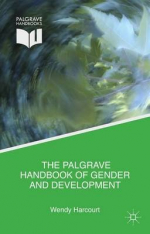
As a graduate student I first came into contact with the work and persons of JK Gibson-Graham. As I was mentored and supervised by Katherine Gibson, the piece, Building Community Economies: Women and the Politics of Place became part of my journey into feminism and feminist postdevelopment research. In this chapter, I highlight three principles I have carried with me from that time until now: starting where you are, seeing diversity, and multiplying possibility.
Beyond the Business Case: A Community Economies Approach to Gender, Development And Social Economy
In this paper we explore how international development discourse has placed women at the center of a "smart economics" approach to economic development. While we are heartened by development discourse's new found interest in economies of care and social reproduction, we are troubled by the way that an essentialized conception of gender is attached to a economic growth as usual agenda.